A Referral Gets Your Name on the List. Your Reviews Decide If They Call.
Even when someone hears about your business from a person they trust, they usually check you out for themselves. They look at your Google Business Profile, read what customers have said, and decide whether they feel comfortable taking the next step.
So today we’re talking about why reviews are more than a star rating. They’re part of how people decide who to trust, who to call, and who to hire.
That decision is still happening in 2026
Even as search changes, people still read before they call.
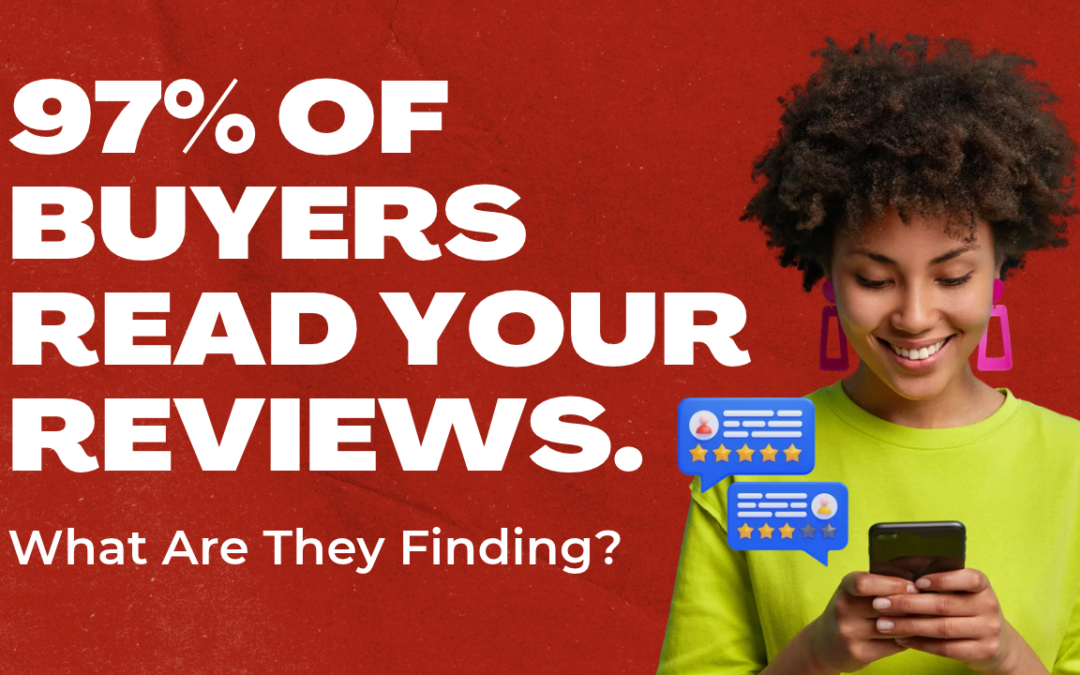
BrightLocal’s 2026 Local Consumer Review Survey found that 97% of consumers read reviews for local businesses. Seventy-four percent said they care about reviews written in the last three months. People want to see a current picture, not a handful of comments from years ago.
AI is changing how some people find businesses, too. It can surface review signals when it recommends a local business — but that doesn’t make real customer experiences less important. BrightLocal found that 88% of consumers fact-check reviews cited by AI tools. Reviews remain part of the evidence people look at, whether they find you through a regular search or an AI recommendation.
The rating is a signal, not the whole story
We’ve seen this show up in our own client work. When a Google Business Profile rating falls below about 4.2, we’ve seen clicks to call start to trend down. That’s a pattern we’ve observed — not a universal cutoff for every business or industry.
Independent research points the same general direction: ratings affect whether people consider a business at all. BrightLocal reported that 68% of consumers only use businesses rated four stars or higher. That doesn’t prove 4.2 is the magic number. It does tell us customers notice the rating, and a lower score can give them a reason to keep researching.
The goal isn’t to chase a perfect five stars. A believable, current pattern of real customer experiences is more useful than a number by itself.
Build a review habit
So how do you build that pattern?
Ask customers consistently. Don’t wait until you remember, and don’t make the customer hunt for the right page. Send a direct link to your Google Business Profile. A personal thank-you and a simple request make it easy for someone to share their honest experience.
Focus on the platforms that matter. Google is an important place for many local businesses to collect reviews, and there are plenty of other sites too. The right ones depend on your industry and where your customers go to compare options. You don’t have to be everywhere. Know where your buyers look, and keep your presence there current.
Keep the request fair. Ask for an honest review, not a five-star review. Don’t offer a reward for a review, and don’t only ask the customers you expect to be positive. The point is to learn from real experiences and make the evidence visible.
Respond to every review
Good, bad, or even one that looks like it was meant for another business.
BrightLocal’s 2026 survey found that 80% of consumers are more likely to use a business that responds to every review. But a response only helps if it sounds like a person. Generic, copy-and-paste replies can make customers question whether you’re paying attention.
A thoughtful response shows you care about the customer’s experience and about your business. For a negative review, stay calm. Acknowledge what the person said. Address the part you can speak to, and invite them to continue the conversation directly when it makes sense. Don’t argue in public or try to win the comment section.
We practice what we preach here at Shield Bar. Our very first review was three stars, back in 2019, from someone we’ve never heard of. I responded to it, and it’s still there today. Potential clients can read it and see that we don’t just tell businesses to ask for reviews and respond to them — we do it ourselves.
We also work with a salon that received a one-star review because someone didn’t like the decorations outside the building. The review wasn’t about the salon’s service. The owner responded, apologized for being festive, and clarified that the decorations didn’t reflect the service customers receive. That reply showed the community the business was paying attention and put the complaint in context. They continue to bring in new clients, even with that review on the page.
A negative review doesn’t get the last word. Your response is part of what future customers read, too.
Put the proof to work
Finally, don’t leave good customer feedback sitting in one place. With permission, use a review on your website, in a proposal, or in an email. Share the words customers actually used. Keep the context honest. Let their experience support your claims instead of asking your own marketing copy to do all the convincing.
Here’s the short version: ask consistently for honest reviews, focus on the platforms that matter in your industry, and respond to every review like a real person. Reviews aren’t just a score. They’re an ongoing record of how your business shows up.
If you want help building a review process that fits your business, book a free discovery call at shieldbar.com. We’ll help you put your customer proof to work.
At Shield Bar Marketing, we install the marketing system growing companies need when the business is evolving. We show up, we keep our word, we get it done.
Call or text: 520.348.4494